
Horizontal scalingadds more pods.
Vertical scalinggives existing pods more resources.
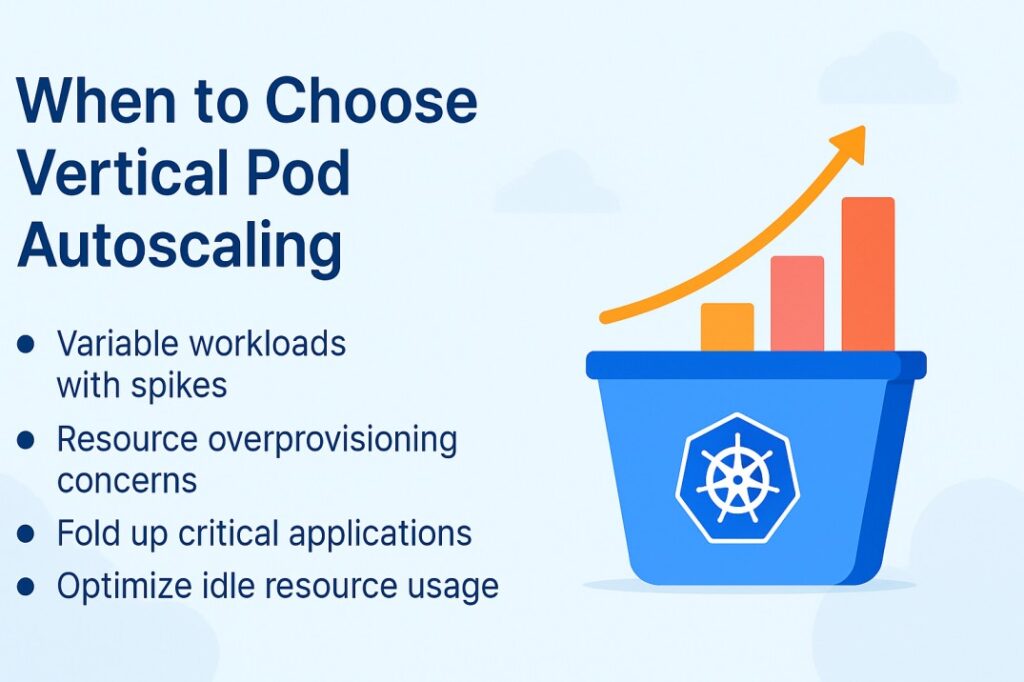
But when does VPA make sense in production-grade Kubernetes clusters?
1. Ideal Use Cases
 Steady workloadswith predictable growth.
Memory-bound apps(e.g., Java, ML models).
Low pod count but high CPU/memory variability.
Non-latency-sensitive workloads (since VPA restarts pods on resize).
2. How VPA Works
- Continuously monitors resource usage metrics via Prometheus.
- Calculates new CPU/memory requests & limits.
- Can update live pods (Auto mode) or suggest changes (Recommend mode).
Example:apiVersion: autoscaling.k8s.io/v1kind: VerticalPodAutoscalermetadata: name: backend-vpaspec: targetRef: apiVersion: "apps/v1" kind: Deployment name: backend updatePolicy: updateMode: "Auto"3. When Not to Use VPA
 Latency-critical microservices– pod restarts may hurt response times.
Deployments already using HPAon the same metric (can conflict).
Large-scale clusters — frequent restarts can cause cascading rebalances.
4. Best Practice
- Use VPA + HPA hybrid carefully (VPA for base tuning, HPA for dynamic scaling).
- Run in “recommend” mode for 1–2 weeks before enabling “auto.”
- Pair with KubeHA’s observability to track pod restarts and resource trends.
Bottom Line: Use VPA when stability, predictability, and right-sizing matter more than instant scale-out. It’s a powerful ally for optimizing resources — when used at the right time.
 Follow KubeHA for practical autoscaling guides, YAML templates, and AI-powered workload optimizations.
Follow KubeHA Linkedin Page KubeHA
Experience KubeHA today: www.KubeHA.com
KubeHA’s introduction, https://www.youtube.com/watch?v=PyzTQPLGaD0